


The question “Is the name Tristan in the Bible?” is common among parents searching for meaningful Christian baby names. Although Tristan has a rich European history, it does not appear in the Old or New Testament. Its origins are generally linked to Celtic and Pictish traditions, with later connections to medieval French literature.
The name is often associated with sadness or sorrow, but this is not an official biblical meaning. Still, Christian families may connect Tristan with hope, compassion, and perseverance through their faith. In this article, we’ll explore its historical roots, spiritual symbolism, and whether Tristan is a suitable choice for a Christian baby name.
1. What Does the Name Tristan Mean?
The name Tristan is generally used as a masculine name. It is familiar in the United States and several European countries. Many name references connect it with Sorrow, Sadness, or Tumult. These meanings are often linked to its resemblance to the Old French word triste, which means sad. However, this explanation does not settle the name’s earliest origin.
The Tristan name meaning is not completely certain because different historical explanations exist. Some researchers connect it with the older Pictish name Drustan. Others discuss its later French and Latin associations. Therefore, it is more accurate to describe Tristan as a name with debated European roots than to give it one definite meaning. Its modern use is not limited to sadness. Parents may also appreciate its literary history, sound, and traditional style.
Common Meaning and Interpretation of Tristan
The name is often explained through its medieval association with sadness. This connection became especially familiar through the story of Tristan and Iseult. In that story, love and difficult circumstances are central themes. The character’s name helped strengthen the association between Tristan and sorrow in European storytelling.
However, a name’s popular meaning is not always the same as its original meaning. The possible connection with Drustan suggests an older history that may not have meant sadness at all. When researching Tristan name meaning for boys, readers should separate traditional interpretations from proven linguistic facts. This helps parents make a thoughtful choice without relying on uncertain claims.
2. Is Tristan Mentioned in the Bible?
No, Tristan is not mentioned in the Bible. The name does not appear among the people named in the Old Testament or the New Testament. There is no biblical king, prophet, apostle, or disciple named Tristan. It is therefore not considered a traditional biblical name like David, Daniel, Samuel, or Matthew.
This does not mean that Christians cannot choose Tristan for their child. Many names used by Christian families come from languages and cultures outside the Bible. A name can have European, African, Arabic, or other cultural roots and still be meaningful to a Christian family. The Christian faith places strong importance on a person’s character, choices, and relationship with God. A name’s absence from Scripture does not decide someone’s spiritual identity.
Why Tristan Is Not Considered a Biblical Name
A biblical name is generally a name that appears in a biblical text or comes from a language and tradition closely connected with Scripture. Tristan does not meet that description. Its history is associated with European languages and medieval literature rather than the Hebrew and Greek names found in biblical accounts.
This distinction matters when readers search Is Tristan a biblical name or Is Tristan mentioned in the Bible. The answer should remain clear and honest. Tristan is a non-biblical name. Any connection made between Tristan and Christian values is a later personal or spiritual interpretation, not a fact recorded in the Holy Scripture.
3. Tristan Name Meaning in the Bible
The Tristan meaning in Bible has no direct definition because the name does not appear in biblical text. Scripture does not give Tristan a Hebrew meaning, a Greek meaning, or a specific spiritual role. Some websites describe it as meaning sorrow or sadness. These descriptions come from its possible European linguistic associations, not from a biblical verse.
Even so, Christians may reflect on themes connected with the name’s popular interpretation. Sorrow and Grief are part of human life, and the Bible speaks often about comfort during painful experiences. A person named Tristan can find encouragement in biblical messages about patience, compassion, and hope. These ideas offer a thoughtful way to explore the Tristan biblical meaning without claiming that the Bible defines the name.
Can Tristan Have a Christian or Spiritual Meaning?
Yes, a family can give Tristan a personal Christian meaning through the values it connects with the name. For example, parents may associate it with compassion for people who experience sadness. They may also connect it with the strength to remain kind during difficult times. These are personal associations rather than the name’s established historical definition.
The Christian meaning of Tristan should therefore be understood as a family interpretation. Christian parents may teach a child to show love, forgive others, and place Trust in God during challenging moments. These lessons come from Christian beliefs and Biblical teachings, not from the name’s etymology. This distinction allows families to appreciate the name while respecting historical accuracy.
4. Tristan Name Meaning in Hebrew and Greek
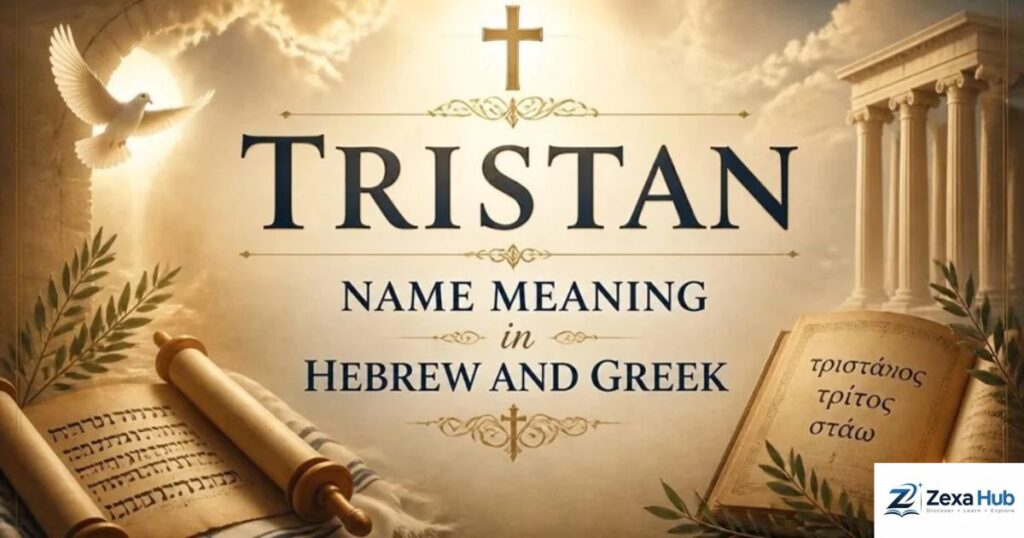
Many readers search for the Tristan meaning in Hebrew because Hebrew is the language of much of the Old Testament. Others look for a Greek meaning because the New Testament was written mainly in Greek. However, Tristan does not have a verified original Hebrew or Greek etymology. It is generally studied through its European historical background.
It is important to understand the difference between translating a name and explaining its origin. A name can be written using Hebrew or Greek letters without becoming a Hebrew or Greek name. Similarly, a word in another language may express an idea that people associate with Tristan. That does not prove that the word is the name’s original meaning. Reliable name research should keep these differences clear.
Does Tristan Have a Hebrew Meaning?
There is no established Hebrew root that gives Tristan a confirmed biblical meaning. Some online sources may connect the name with Hebrew words related to sadness or hope. Such claims should be checked carefully. A similar sound or theme does not establish a genuine linguistic relationship.
For example, Atzev is associated with sadness in some Hebrew word references, while Tikvah means hope. Neither word is the Hebrew translation or historical origin of Tristan. They can help explain different ideas found in Hebrew vocabulary, but they should not be presented as the name’s meaning. The most accurate answer is that Tristan has no confirmed traditional Hebrew meaning.
Does Tristan Have a Greek Meaning?
Tristan also has no established Greek origin or biblical definition. The Greek word lypē refers to sorrow or distress, while chara means joy. These words express emotions that may appear in discussions about the name’s symbolism. However, they are not translations of Tristan and do not establish a Greek connection.
This distinction is useful for anyone researching the Tristan meaning in Greek. Greek words can help readers understand themes such as sorrow and joy in Christian writing. Yet the name itself is not known as a Greek biblical name. It is better to discuss these words as separate language examples instead of assigning them to Tristan.
5. Origin of the Name Tristan: Celtic, Latin, and Christian Roots
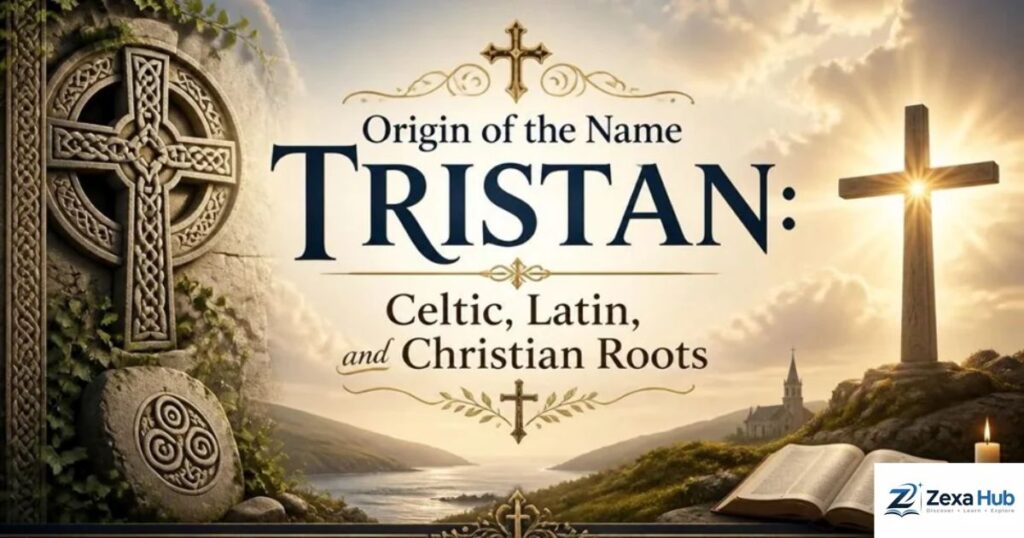
The Tristan name origin is usually connected with old European languages and medieval stories. One widely accepted explanation links it to the Pictish name Drustan, which may be a shorter form of Drust. The older Celtic root associated with Drust has been connected with Noise or Tumult. The name may have passed into Welsh as Drystan or Trystan before appearing in French stories.
Behind the Name+2
Another influence came from Medieval French. The name Tristan became associated with triste, meaning sad. This may explain why many modern sources connect it with Sadness or Sorrow. Latin tristis also means sad or sorrowful. However, this is likely a later association rather than proof that Tristan originally came from Latin. Its Celtic roots and possible Brythonic origin are important parts of its history.
Etymology, Origin & Meaning+2
Celtic and Pictish Roots of Tristan
The Picts were an ancient people who lived in what is now Scotland. Historical name references record forms such as Drust and Drustan in connection with Pictish history. The name Drustan is often presented as a possible earlier form of Tristan. The exact path from the older name to the medieval spelling is still discussed by researchers.
The Celtic origin of Tristan is also connected with Welsh forms such as Drystan and Trystan. These forms appear in discussions of early Welsh literature and Celtic legend. Some sources connect the older root with Tumult, while others focus on the later French association with sadness. This is why a careful explanation should mention more than one theory.
Behind the Name+2
Latin and French Connections
Latin tristis means sad, gloomy, or sorrowful. The related Old French word triste also means sad. These words help explain the emotional meaning that became attached to Tristan in medieval Europe. However, the similarity does not prove that the name was originally created from the Latin word.
Etymology, Origin & Meaning+1
The phrase Latin Tristis is therefore useful when explaining the name’s later association with sadness. It should not be presented as a confirmed direct translation of Tristan. The name’s development involved older Celtic forms, Welsh spelling, and French literary influence. Understanding these stages gives readers a more accurate picture of its history.
Tristan in Medieval Christian Europe
The story of Tristan and Iseult became well known in medieval European literature. It tells of Tristan, the nephew of King Mark of Cornwall, and his complicated love for Iseult. Different writers retold the story over time. The surviving versions helped make Tristan familiar across several European cultures.
New Advent+1
The story belongs to medieval literature, not to the Bible. Its popularity in Christian Europe does not make Tristan a biblical name. It does show how names from older cultural traditions became part of European Christian societies. This is an important distinction when discussing the Christian meaning of Tristan and its historical background.
6. Spiritual Significance and Symbolism of the Name Tristan
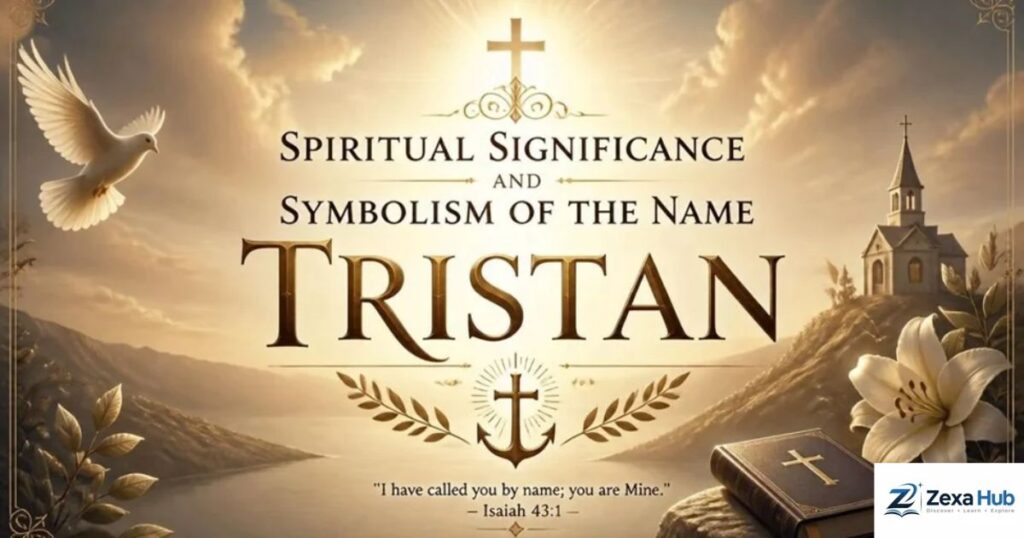
The Spiritual significance of Tristan depends on how a person or family chooses to interpret the name. Its popular association with Sorrow may encourage reflection on compassion and care for others. Its older association with Tumult may also lead people to think about calmness and patience during difficult situations. These are symbolic ideas, not fixed meanings given by Scripture.
The Tristan spiritual meaning can therefore be connected with Hope, Perseverance, and Strength through hardship. Christian teaching reminds believers that painful experiences do not have to define their future. Faith can encourage people to seek comfort, support others, and continue doing what is right. These ideas offer a positive interpretation without suggesting that a person named Tristan is destined for sadness.
Tristan Symbolism: Hope, Strength, and Perseverance
The Tristan name symbolism can be explored through the contrast between sorrow and hope. A person may face disappointment, loss, or uncertainty. These experiences can be difficult, but they do not remove the possibility of growth. Romans 5:3–4 teaches that perseverance develops character and that character leads to hope.
Bible Gateway+1
This passage offers a useful Christian reflection for someone named Tristan. It does not describe the name itself. Instead, it explains how believers can respond to life’s challenges. Endurance does not mean pretending that everything is easy. It means continuing with faith, wisdom, and patience while seeking help when needed.
The Spiritual Meaning of Sorrow and Comfort
The Bible does not treat sadness as a sign of weakness. It recognizes that people experience pain and need comfort. Psalm 34:18 teaches that God is close to the Brokenhearted. This message can help readers understand compassion as an important part of Christian life.
Bible Gateway
A person may connect the name Tristan with the idea of supporting others through Difficult seasons. The Christian message is not that suffering should be welcomed or ignored. It is that people can seek comfort, care, and Healing during painful times. This is a thoughtful personal association, not a prediction about anyone’s life.
How Christians Can Interpret the Name Tristan
Christians may choose to connect Tristan with kindness, patience, and care for people who are struggling. These values reflect Christian symbolism when they are connected with the teachings of Jesus. Jesus Christ showed compassion toward people who were rejected, sick, grieving, or in need. His example encourages believers to treat others with dignity.
The name can also remind a family of God’s grace, Restoration, and the possibility of Joy after sorrow. These themes can become part of a family’s personal interpretation. They do not change the historical origin of Tristan. They simply show how a non-biblical name can carry meaningful values within a family’s Christian faith.
7. Biblical Lessons and Bible Verses for Someone Named Tristan

Although Tristan is not found in the Bible, several passages offer lessons that can be meaningful to anyone with this name. These verses discuss comfort, faith, patience, and strength. They do not give Tristan a special biblical definition. Instead, they provide guidance for living with kindness and trust.
The following passages are especially relevant when discussing the Biblical meaning of sorrow as a theme rather than as the literal meaning of Tristan. They show that the Bible recognizes human pain while also teaching Hope, Perseverance, and faith. Readers can study the full passages in their preferred Bible translation.
| Bible verse | Main message | Connection to the article |
| Psalm 34:18 | God is close to the brokenhearted | Comfort during sadness |
| Psalm 30:5 | Sorrow does not last forever | Hope after difficult times |
| Romans 5:3–4 | Perseverance develops character | Strength and patience |
| James 1:2–3 | Tested faith develops perseverance | Growth through challenges |
| Isaiah 40:31 | Those who trust in God receive renewed strength | Faith and endurance |
| 2 Corinthians 12:9 | God’s grace is sufficient | Strength when people feel weak |
Psalm 34:18 — God Is Close to the Brokenhearted
Psalm 34:18 reminds readers that God is close to people who feel brokenhearted. It offers comfort to anyone experiencing grief or emotional pain. The verse teaches that sadness does not mean a person has been forgotten. It encourages compassion toward people who need support.
Bible Gateway
For someone named Tristan, this verse can provide a positive spiritual reflection. The name’s popular association with sorrow can become an opportunity to discuss kindness and understanding. A family might use this passage to teach a child to listen carefully and care about others. The lesson is about compassion, not the name’s origin.
Romans 5:3–4 — Perseverance Builds Character
Romans 5:3–4 explains that suffering can produce perseverance, character, and hope. This does not mean people should seek painful experiences. It means that when challenges happen, faith can help people respond with patience and courage. The passage connects Endurance with long-term spiritual growth.
Bible Gateway
This lesson can be connected with the positive Tristan spiritual meaning that some Christian families choose to recognize. A person can learn to remain honest and kind even when life becomes difficult. Faith can also encourage people to ask for support rather than facing every problem alone.
Psalm 30:5 — Joy Comes After Sorrow
Psalm 30:5 is often remembered for its message that sorrow is temporary and joy can come again. It gives readers a reason to remain hopeful during painful periods. The verse does not promise that every problem will disappear immediately. It expresses confidence in God’s goodness beyond a season of sadness.
Bible Gateway+1
This passage is especially relevant when discussing Joy after sorrow. It helps balance the name’s traditional association with sadness. Instead of treating sorrow as a person’s identity, readers can focus on comfort, renewal, and the possibility of better days.
Isaiah 40:31 — Finding Strength Through Faith
Isaiah 40:31 encourages people who place their hope in the Lord. The verse uses the image of renewed strength to describe the help God gives. It reminds readers that they do not have to depend only on their own ability. Faith can provide encouragement when they feel tired or uncertain.
For a person named Tristan, the verse can represent Strength through hardship as a personal faith lesson. It encourages patience and trust during times when progress feels slow. The message is useful for people of every name and background.
James 1:2–3 — Growing Through Trials
James 1:2–3 teaches that the testing of faith develops perseverance. The passage encourages believers to keep their faith during challenges. It does not say that difficult experiences are always easy or pleasant. Instead, it explains that a faithful response can help develop patience and maturity.
Bible Gateway
This lesson can connect with Spiritual growth and Divine purpose. A Christian family may teach a child named Tristan to respond to problems with wisdom, patience, and kindness. The name does not determine the child’s future. The values learned through family, faith, and everyday choices help shape character.
8. Is Tristan a Good Christian Name for a Baby?

Tristan can be chosen by Christian parents even though it is not a biblical name. The name has a long European history and is familiar in English-speaking countries. Some parents may like its sound and literary background. Others may prefer a name that appears directly in Scripture. Both choices can fit within different family traditions.
When considering a Tristan Christian name, parents should understand its possible meanings and cultural background. Its association with sadness comes mainly from its medieval French connection. Its possible older roots are linked with Pictish and Celtic forms. A family can still give the name a positive personal meaning through its values and faith.
Reasons Christian Parents May Choose Tristan
Some parents prefer names with a distinctive sound and a long history. Tristan has both qualities. It is recognizable without being identical to many traditional biblical names. Parents may also appreciate its connection with European literature and its use across different cultures.
Families looking for Godly baby names do not have to choose only names found in the Bible. They can consider a name’s sound, history, meaning, and personal importance. The most important point is to make an informed choice. A child’s spiritual life will depend on much more than the name written on a birth certificate.
Things to Consider Before Choosing Tristan
Parents should consider the name’s different interpretations before making a decision. Some sources connect Tristan with sorrow, while others discuss its possible older Celtic and Pictish roots. These explanations are not identical. Understanding the uncertainty can help parents avoid choosing a name based on an inaccurate definition.
It is also helpful to think about pronunciation and spelling. In American English, Tristan is commonly pronounced TRIS-tən. Families may want to say the full name aloud with their chosen middle and last names. They can also consider whether its literary associations feel suitable for their family.
Middle Names That Pair Well With Tristan
Tristan works with several traditional middle names. Parents may like combinations such as Tristan James, Tristan Matthew, Tristan Daniel, or Tristan Nathaniel. These names have their own histories and biblical connections. Pairing them with Tristan does not change Tristan’s origin, but it can create a name combination that reflects family preferences.
A useful approach is to choose a middle name for its meaning or family connection. For example, parents may select a name associated with faith, gratitude, or a relative they respect. This makes the full name personally meaningful. The best Christian baby name meaning is one that the family understands and feels comfortable explaining.
9. Biblical Names Similar to Tristan
Parents who like Tristan may also want to explore Biblical names similar to Tristan. Some names have a comparable sound or style, while others may appeal because of their meanings. These similarities do not mean that the names share the same origin. They simply give parents more choices when researching names for a baby.
The table below includes several names found in biblical traditions. Their meanings are common interpretations and may vary between naming references. Tobias appears in the Book of Tobit, which is included in Catholic and Orthodox biblical canons but not in most Protestant Old Testament collections. This difference is useful for readers in the United States who may follow different Christian traditions.
| Name | Common meaning | Biblical connection |
| Nathan | He gave | Prophet who advised King David |
| Thomas | Twin | One of Jesus’ disciples |
| Timothy | Honoring God | Early Christian leader and companion of Paul |
| Tobias | God is good | Main figure in the Book of Tobit |
| Daniel | God is my judge | Prophet in the Old Testament |
| Matthew | Gift of God | One of Jesus’ disciples |
Biblical Boy Names With a Similar Style to Tristan
Nathan, Thomas, and Daniel may appeal to parents who like Tristan. They are familiar names with established biblical histories. Nathan was a prophet during the time of King David. Thomas was one of Jesus’ disciples. Daniel is known for his faith and courage in the Old Testament.
These names are not direct alternatives in meaning or origin. However, they may suit families who want a name with a clear connection to Scripture. Parents can compare their pronunciation, spelling, and personal associations. This makes the search for a suitable name more thoughtful.
Christian Baby Names Associated With Hope and Strength
Some biblical names are connected with stories of faith, courage, and trust. Daniel is remembered for remaining faithful during a difficult period. Joseph is known for his patience and forgiveness after serious family problems. Hannah is remembered for prayer and devotion. Their stories offer lessons that parents may want to share with a child.
These examples also show why a name’s biblical connection can be meaningful to a family. Joseph, Job, Hannah, and King David each have different stories in Scripture. Their experiences should not be reduced to a single name meaning. Instead, parents can explore the values and lessons connected with their lives.
How to Choose Between Tristan and a Biblical Name
Choosing between Tristan and a biblical name depends on family preferences. Some parents may value Tristan’s European history and modern sound. Others may prefer a name with a direct connection to a biblical person or story. There is no single choice that suits every Christian family.
Parents can compare the historical origin, pronunciation, meaning, and religious background of each name. They may also consider family traditions and how the name sounds with the surname. A thoughtful decision should be based on reliable information rather than claims that a name guarantees a particular future.
10. What the Bible Teaches About Names, Identity, and Spiritual Purpose

Names have an important place in many biblical stories. Sometimes a name reflects a person’s history or a major change in their life. In Genesis 17:5, God changes Abram’s name to Abraham. In Genesis 32:28, Jacob receives the name Israel. These examples show that names can carry meaning within a specific biblical story.
However, the Bible also teaches that a person’s identity is deeper than a name. Faith, character, and actions matter. Someone named Tristan does not have a fixed personality because of the name’s possible meaning. The Biblical identity of a Christian is connected with faith and a relationship with God. This is a more meaningful way to discuss God’s purpose than making assumptions from a name.
Why Names Matter in the Bible
In the Bible, names sometimes reflect important events or promises. Abraham’s name is connected with the promise that he would become the father of many nations. Jacob’s name change to Israel takes place after a major spiritual encounter. These examples show how a name can become part of a larger story.
They do not mean that every name has a hidden biblical message. Tristan has no recorded role in these accounts. Its meaning should be explained through its European history. The biblical examples simply help readers understand why names can matter in family, cultural, and religious life.
Your Identity Is More Than Your Name
Isaiah 43:1 offers a message about being known and called by God. It reminds readers that their value does not depend on popularity, appearance, or the meaning of their name. Christian identity is shaped by faith and the way a person responds to God’s teachings.
This lesson is important for anyone researching Tristan name meaning Bible. A person named Tristan is not defined by Sorrow, Noise, or any other proposed meaning. A name can be part of someone’s story, but it cannot describe everything about that person. Their choices, relationships, and values also matter.
Living With Faith and Spiritual Purpose
Christian faith encourages people to live with kindness, honesty, patience, and compassion. These values can guide someone named Tristan just as they can guide anyone else. A family may teach a child to care for others, speak truthfully, forgive, and remain hopeful during difficult situations.
This is where the personal Spiritual significance of a name can become meaningful. Parents may connect Tristan with Redemption, Restoration, and God’s grace as reminders of values they want to teach. These are faith-based associations rather than definitions of the name. A meaningful life comes from the way a person lives, not simply from the name they carry.
Conclusion: Understanding the Tristan Name Meaning in Bible
The Tristan name meaning has a fascinating European history. Its possible origins are connected with Pictish and Celtic names. Its later association with sadness developed through Old French and medieval literature. However, Tristan does not appear in the Bible and has no confirmed Hebrew or Greek biblical meaning.
Behind the Name+2
For Christian families, Tristan can still carry personal meaning. Parents may connect it with compassion, patience, Hope, and Perseverance. These values reflect Faith-based naming traditions, in which families choose names from different cultures and give them personal importance. Ultimately, a person’s character and relationship with God matter more than whether their name appears in Scripture.
Frequently Asked Questions
1. What does the name Tristan mean in the Bible?
Tristan has no direct biblical meaning because it does not appear in Scripture. Its commonly reported associations include sadness and sorrow. These come from its European linguistic and literary history, not from a biblical definition.
2. Is Tristan mentioned in the Bible?
No. There is no biblical character named Tristan in the Old or New Testament. The name is associated with European history and medieval literature rather than biblical history.
3. Is Tristan a biblical or Christian name?
Tristan is not a traditional biblical name. However, Christian parents can choose it for their child. A name does not have to appear in the Bible to become personally meaningful to a Christian family.
4. What is the spiritual meaning of Tristan?
There is no official biblical spiritual meaning for Tristan. Some families may connect it with compassion, patience, hope, and strength during difficult times. These are personal Christian interpretations.
5. Does Tristan have a Hebrew meaning?
No verified Hebrew origin or traditional Hebrew meaning has been established for Tristan. Words such as Tikvah, meaning hope, and Atzev, associated with sadness, are separate Hebrew vocabulary items. They are not translations of Tristan.
6. What does Tristan mean in Greek?
Tristan has no established Greek biblical meaning. Greek words such as Lype and Chara refer to sorrow and joy, respectively. They express separate ideas and are not the origin of Tristan.
7. Does Tristan mean sadness or sorrow?
Tristan is commonly associated with sadness because of its connection with Old French triste. However, its earlier history may be linked with the Pictish name Drustan. Therefore, sadness is a later association rather than a certain original meaning.
8. What is the Celtic origin of Tristan?
Tristan is commonly linked with the Pictish name Drustan and Welsh forms such as Drystan and Trystan. Its exact early development is uncertain. The name became widely known through medieval European stories.
9. Is Tristan a good name for a Christian baby?
Christian parents may choose Tristan if they appreciate its sound and history. It is not a biblical name, but families can connect it with positive values such as kindness, compassion, and faith.
10. What biblical names are similar to Tristan?
Names such as Nathan, Thomas, Daniel, Timothy, and Matthew may appeal to parents who like Tristan. These names have direct biblical connections, although they do not share Tristan’s historical origin.
Sources and Further Reading
For readers who want to explore the name’s history and biblical references in more detail, these resources are useful starting points.
| Source | What it helps explain |
| Behind the Name | Tristan’s possible Pictish origin and medieval history |
| American Name Society | Historical discussion of Tristan’s Celtic and French associations |
| Etymonline | The history of the French word triste and Latin tristis |
| Bible Gateway | Reading the Bible passages discussed in this article |
| Middle English Texts Series | Historical background of the Tristan and Isolde legend |
Final note: The name Tristan has a rich cultural history, but it should not be described as a name given a specific meaning by the Bible. Its spiritual significance comes from the values a person or family chooses to associate with it.

Christian Content Writer | Sharing Biblical Wisdom, Faith, and Inspiration Through Meaningful Words.